
Back to Basics
Centring Solidarity over Identity in Equality, Diversity, and Inclusion


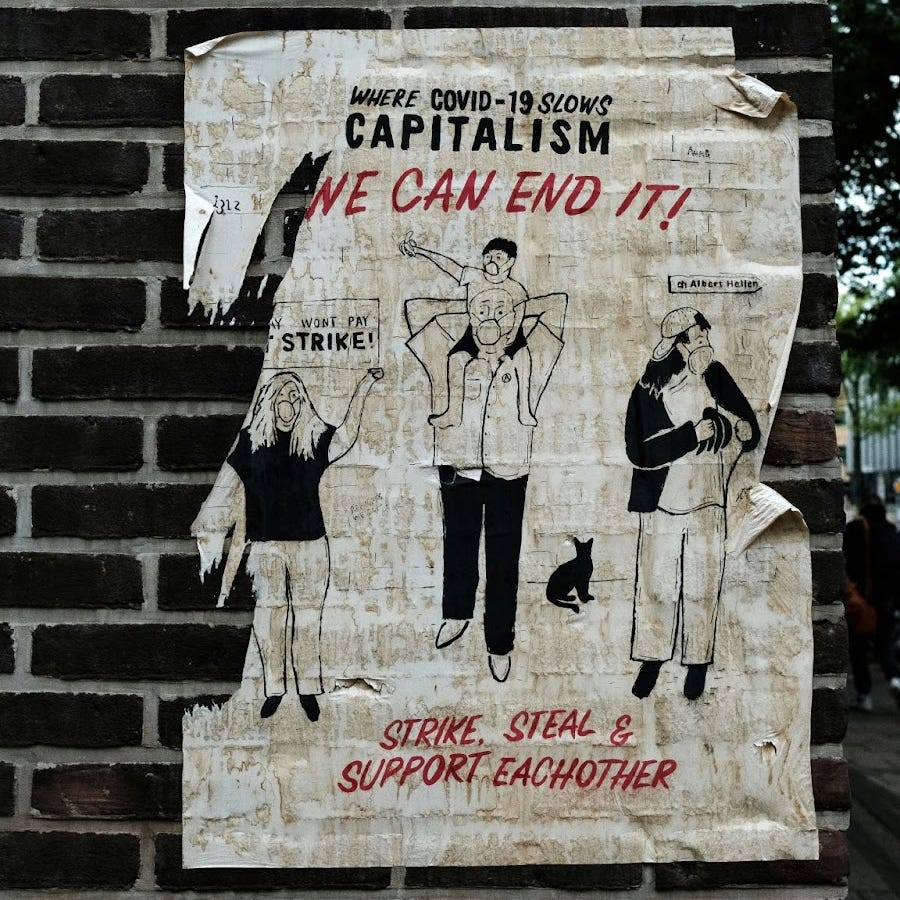
Performative Solidarity
Littered throughout brands and workplaces, ever-increasing Equality, Diversity and Inclusion (EDI/DEI) initiatives have been keen to showcase inclusivity and acceptance following the murder of George Floyd in 2020. Whether it be annual social-media posts during Black History Month, one-off trainings, or a workshop about micro-aggressions, organisations often commit to EDI because ‘it’s good for business’. Positive brand imagery is clearly at the heart of the sudden surge in inclusivity messaging, so much so that the performance of solidarity risk damaging the movements they claim to represent.
When anti-racism is understood to be directly at odds with capitalism, EDI initiatives become a reflection of how much a business is willing to sacrifice without losing what they consider to be ‘too much’. ‘Too much’, in this case, refers to institutional and structural change. See, what began as an interrogation of society’s structural discrimination has been warped into a question of brand image, reputation, and gestures over actions.
EDI Polishes the Chains of Neoliberal Capitalism
The hollow nature of EDI is increasingly coming under fire. Mainstream criticism seeks to scrap the practice entirely, in favour of some ‘pure meritocracy’ that’s blind to systemic inequalities - the kind of view espoused by the likes of Nigel Farage (Forsyth and Nevett, 2025). Outside of this bad-faith discourse on EDI, there is growing criticism that aims to reconnect the practice with its system-changing roots (Zheng, 2022; Read, 2021). While these focus on enhancing existing practices, they neglect an important barrier to effective implementation: that EDI generally operates at the behest of business leaders.
As such, EDI is generally used as a tool to serve business interests and the results are ludicrous to say the least. In the most egregious display of performativity, “Lockheed Martin - an actual fucking arms manufacturer - sent three of its white male executives on an anti-racism training day” (Sarkar, 2025). All the while, the company is complicit in the ongoing genocide of Palestinians (Lockheed Martin, n.d.; International Association of Genocide Scholars, 2025). You can’t make this stuff up.
Now, I’m not going to suggest that a reconfiguration of EDI would cause arms manufacturers to shut off their production lines. Our government would sooner proscribe the practitioners. Nevertheless, it’s worth noting that the EDI-industrial complex plays a validating role, protecting organisations from interrogating their actual operations to any meaningful extent. It allows organisations to elevate their ‘progressive’ and ‘inclusive’ identity above their material impact.
Top-down implementation of EDI leaves the practice vulnerable to superficial initiatives. These can sometimes be impactful, of course, but they are often severed from their anti-capitalist roots. In this way, the EDI (DEI)-industrial complex threatens to undermine the very movements it claims to support (Zheng, 2022). By offering surface-level solutions, they incrementally mask structural discrimination and exploitation.
EDI ultimately becomes focused on identity-based, box-ticking exercises. And what’s lost? The understanding that meaningful anti-racism is inherently tied to solidarity across the working and middle classes, among workers. EDI practitioners must reorient their focus to build this solidarity. By paving the way to unionisation, practitioners can become drivers for workplace mobilisation and improved conditions for workers themselves.
EDI shouldn’t be good for business; it should be good for workers. But what does this mean in practice?
Changing Who EDI Serves
Building workforce solidarity to ensure the standard and quality of working conditions is nothing new; Britain has a rich history of strong trade union movements. Still, the advent of neoliberalism entailed a period of deindustrialisation, a cultural shift towards greater individualism, legislation that weakened unions’ collective bargaining power, and a drastic decline in membership across industries.
Membership has been in decline for decades, accounting for only 11.7% and 22% of private and public sector workers, respectively (Department for Business and Trade, 2025). Compared to membership figures in 1980 (over 13.2 million), total trade union membership has more than halved (Clark, 2025).
Where trade unions are present, however, collective bargaining can play a strong role in organisations and industries in favour of greater equality, diversity, and inclusion. Unionisation can bolster EDI initiatives by offering greater penetrative force. Being administered by workforce representatives, initiatives are less likely to be hollowed out by overriding business interests.
Some time before the cultural shift towards EDI initiatives, Bectu used its collective bargaining power to challenge racial inequalities. The union serving workers in UK media and entertainment launched the Move On Up campaign in 2003. Based on the experiences of Black and brown professionals, the campaign aimed to challenge the lack of contacts and networks in an industry where success hinges on ‘who you know’ (Bectu, 2025). Through developing partnerships with industry employers, “the union had set up 6,000 one-to-one meetings between 2,000 professionals and 800 executives from all the main broadcasters” by 2015 (TUC Education, 2022). The inaugural event, which saw 10% of Black workers offered jobs from the contacts made, operated as a springboard for this long-term campaign (TUC Education, 2022).
So, unlike a lot of modern EDI initiatives (those that come across as superficial or performative), the Move On Up campaign targeted a core issue faced by people of colour in the entertainment and media. Trade unions are ultimately better placed to take on anti-racist initiatives because they represent workers’ interests, directly at odds with profit-making incentives. That’s not to say EDI practitioners have no role to play in delivering an equitable workplace; it’s quite the opposite. EDI practitioners can play a key role in invoking the culture shift back towards widespread unionisation.
EDI as a conduit for unionisation
We can maximise the potential of EDI initiatives by viewing them as bridges to unionisation; as conduits for shifting cultural attitudes and empowering workers to organise. Race and class are intrinsically linked, and this is the message that should drive anti-racist initiatives from EDI practitioners. Practitioners can contribute to eventual structural changes by having worker unionisation at the forefront of their aims. By emphasising and educating people on the importance of trade unions for all workers, not only could they encourage workers to join existing unions, but also to organise and form their own. For a version of EDI that is rooted in anti-racism, the interconnectivity of systemic inequalities and the importance of solidarity among the workforce must be at the forefront of practice. Only then can we limit hollow practices in favour of guided workforces to organise and protect from exploitation.
Dyar
Sources
Bectu. Bectu’s Black Members’ Committee. [online] Available at: https://bectu.org.uk/get-involved-in-the-union/bectus-diversity-work/ [accessed September 2025].
Clark, D. (2025). Number of trade union members in the United Kingdom from 1892 to 2023. [online] Statista. Available at: https://www.statista.com/statistics/287241/uk-trade-union-membership/ [accessed Sep. 2025].
Department for Business & Trade. (2025). Trade union membership, UK, 1995 to 2024: statistical bulletin. [online] GOV.UK. Available at: https://www.gov.uk/government/statistics/trade-union-statistics-2024/trade-union-membership-uk-1995-to-2024-statistical-bulletin#public-and-private-sectors-1 [accessed September 2025].
Forsyth, A. and Nevett, J. (2025). Nigel Farage says men make sacrifices many women don’t for jobs. BBC News. [online] 27 Mar. Available from: https://www.bbc.co.uk/news/articles/c4gpnl0x3w3o [accessed September 2025].
International Association of Genocide Scholars (2025). IAGS Resolution on the Situation in Gaza. [online] International Association of Genocide Scholars. Available at: https://genocidescholars.org/wp-content/uploads/2025/08/IAGS-Resolution-on-Gaza-FINAL.pdf [Accessed Sep. 2025].
Lockheed Martin. (n.d.). About Lockheed Martin Israel. [online] Available at: https://www.lockheedmartin.com/en-il/who-we-are.html.
Read, B. (2021). Doing the Work at Work: What are companies desperate for diversity consultants actually buying? The Cut. [online] 26 May. Available at: https://www.thecut.com/article/diversity-equity-inclusion-industrial-companies.html [accessed Sep. 2025].
Sarkar, A. (2025). Minority Rule. Bloomsbury.
TUC Education (2022). Tackling racism and inequality at work. [online] YouTube. Available at: [accessed Sep. 2025].
Zheng, L. (2022). The Failure of the DEI-Industrial Complex. Harvard Business Review. [online] 1 Dec. Available at: https://hbr.org/2022/12/the-failure-of-the-dei-industrial-complex [accessed Sep. 2025].
Glossary
Capitalism
An economic and political system in which a country’s trade and industry are controlled by private owners for profit.
Collective bargaining: The negotiation of conditions of employment by an organised body of employees.
Deindustrialisation: The shift of an economy away from manufacturing and towards service-based industries that leads to a decline in the manufacturing sector’s share of national employment and output.
Individualism: The idea that freedom of thought and action for each person is the most important quality of a society, rather than shared effort and responsibility
Meritocracy: A social system, society, or organisation in which people get success or power because of their abilities, not because of their money or social position.
Neoliberalism: A political approach that favours free-market capitalism, deregulation, and a reduction in government spending.
Structural discrimination: Structural discrimination involves policies, practices, norms, and attitudes embedded within a society’s social, political, and institutional structures that systematically disadvantage certain social groups.
Systemic inequalities: Deeply ingrained disparities in society’s structures, policies, and norms that disadvantage certain groups while advantaging others, resulting in unfair access to resources, opportunities, and well-being.